
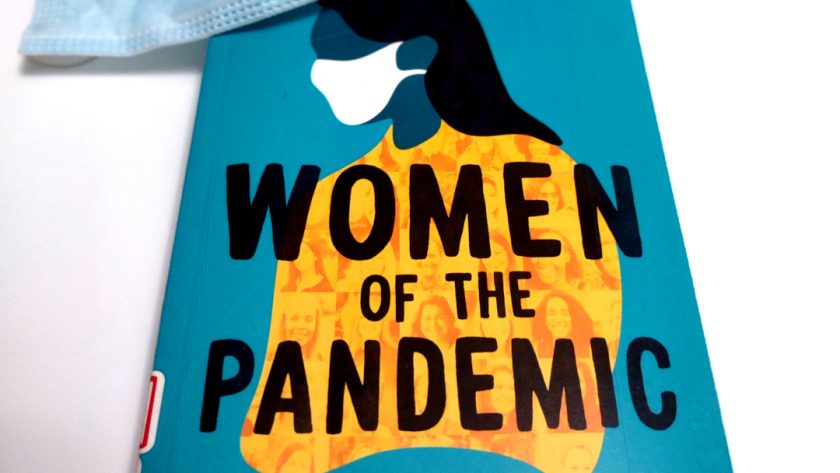
The book “Women of the Pandemic, Stories from the Front Lines of COVID-19” was published at the beginning of this year by Lauren Mckeon, where she tells us the women who led us through this pandemic.
Lauren tells us who they were, what they feared, and what kept them going in the dark. This book is divided into nine chapters, starting when the pandemic arrived in Canada, continuing with the challenges that fierce the country through different women’s stories, and close with the recovery after the vaccination plan that is the moment we are now.
The disproportionate statistics show us that people who live in marginalized and lower-income neighborhoods do not have the possibility of working from home. They left their houses every day, assuming high-risking exposure because they couldn’t afford to don’t it. Specially racialized and immigrant women. The worst case is that we talk about homeless people, saying “stay home, save lives” when you have no home to go.
Many stories call my attention, and I want to share with you some of them. One is about Doctor Kanna Vela, an emergency room physician working with covid-19 patients and the mother of two little kids. When the pandemic arrived, Kanna sacrificed to see her family moving out from her home as many front-line workers. Lauren tells us how Kanna’s stress was every day and how this virus affected our lives differently. If we were stressed and anxious, we can’t imagine the terrible feelings that experiment front line workers, and Kanna, through her story, shows it to us.
Also, Lauren chose some stories about how this crisis affected our homes. As say Andrea O’Reilly (York University Professor), “mothering right now is an essential service,” “mothers are doing this work at a huge cost to their sanity, their leisure, their time, and their careers.” It is not an equal-opportunity pandemic. Whenever people said: “women were suffering more,” she still liked to correct them “mothers are suffering more,” she told people because they are the ones doing the care work. O’Reilly created a Facebook group to support mothers through this pandemic after she stumbled across a post that detailed one single mother’s experience in the meantime. The mom described being bullied at Costco after being forced to take her young kids to get groceries, which was against the store’s recommended rules. She needed supplies because most of her delivery had been canceled; when she arrived at the store, employees berated her as if she had wanted to bring her kids to the store. Also, O’Reilly created the hashtag #MothersAreFrontLineWorkers. Within 24 hours, more than 250 moms had joined the group; in a couple of weeks, it hit 1.200 members. She wants the mothers to have a safe space to vent, feel validated, find resources, and a place where they can express their feelings and find support.
In O’Reilly’s Facebook group, mothers talked about caring for children and the elderly, often terminally ill parents, and having to do all the cooking while other family members did not recognize the energy it takes. They talked about the only one responsible for washing every fruit and vegetable before entering the fridge. Some media started to cover this situation with articles like “Patriarchal Pandemic,” “the Coronavirus is a Disaster for Feminist,” but it wasn’t enough information about it.
Across the world, countries began to report rising domestic violence rates. In the U.K, suspected domestic homicides tripled during the first month of lock-down, with sixteen women and girls murdered. If we check Latin-American, the situation was even worst. In chapter 6, “The She-Cession,” Lauren discusses how this pandemic also affected women entrepreneurs and workers.
In the last chapters, Lauren talks about the critical decisions that so many women made. Researchers found one possible reason, and it’s unlike men, women prioritize saving lives and health over the economy. For example, the women national leaders fared better in terms of both infection and mortality rates (Angela Merkel, Jacinda Arden, Sanna Marin, and others). And many women made significant contributions to building the vaccinations.
In conclusion, I love this book because it shows us the women we have met have revealed extraordinary strength, and they have suffered immeasurable loss. They have made their own mistakes, and they have borne the brunt of others. But what they all have in common is that, during the worst time in contemporary society, they tried, they tried to connect us. They tried to keep us safe; They tried to look out for each other. They tried to keep us healthy, to take care of us.
Lauren hopes this book helped capture an extraordinary moment in time and the women who define it. Their stories, their actions, and their voices.



[…] English Version […]