
Artificial intelligence (AI) is transforming the way we work, analyze information, and make decisions. The forestry sector is no exception. From forest inventories and wildfire monitoring to programming and spatial data analysis, these technologies are creating new opportunities to improve efficiency and deepen our understanding of forests.
But how prepared are forestry professionals to use them?
I recently attended “Everyday Use of AI in Forestry and Natural Resources,” a presentation delivered by Craig Robinson, RPF, on November 4, 2026. The session explored practical applications of artificial intelligence and, more importantly, the importance of using these tools responsibly.
How Is AI Being Used in Forestry?
One of the most promising applications of AI in forestry is the analysis of large volumes of geospatial data.
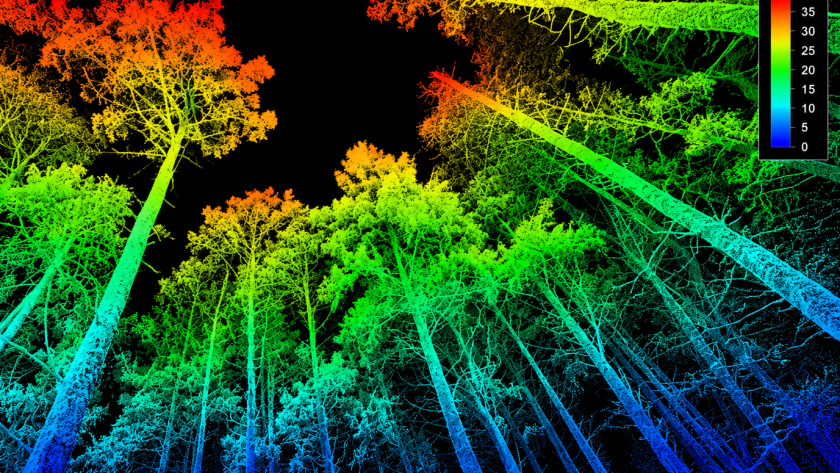
By combining artificial intelligence with satellite imagery, LiDAR data, and field measurements, we can develop models to identify individual trees, estimate forest attributes, and detect changes in vegetation.
During the presentation, TreeID was introduced as a LiDAR-based forest inventory technology capable of identifying individual trees and estimating attributes such as species, height, diameter, and volume.
These tools represent a significant advancement in traditional forest inventory methods, although their results still require calibration and validation using field data.
Another application is automated object detection in images. The presentation introduced RF-DETR, a computer vision model that can be trained to recognize specific objects. In forestry, this approach could be used to identify trees, infrastructure, features of interest, or other characteristics visible in aerial imagery.
These technologies can also support wildfire monitoring, forest health assessments, and the monitoring of restoration projects.
From Writing Code to Working with AI Agents
One of the topics that caught my attention most was the evolution of programming tools.
For years, automating forestry workflows has required knowledge of programming languages such as Python, particularly when working with ArcGIS, databases, and spatial analysis.
Today, AI-powered coding assistants and agents can help write, review, explain, and debug code.
During the presentation, an example demonstrated how an AI coding agent integrated into a development environment could assist with Python scripts related to forest models and climate data.
This creates interesting opportunities for professionals who need to automate repetitive tasks, process large datasets, or develop analytical tools without spending as much time troubleshooting programming issues.
However, generating code does not necessarily mean generating correct code. An AI agent may suggest a solution that works technically but produces incorrect results from a forestry perspective.
AI can help us work faster, but it cannot replace our ability to interpret and validate results.
Are We Integrating These Tools into Our Work?
During the session, participants were asked how frequently they use artificial intelligence in their professional lives.
Of the 53 responses recorded:
- 24 participants reported using AI daily.
- 14 reported using it weekly.
- 7 reported using it hourly.
- 8 indicated that they rarely or never use it.
In other words, approximately 85% of respondents reported using AI at least once a week.
Although this survey is not representative of the entire forestry sector, it offers an interesting glimpse into the adoption of these technologies among the professionals who attended the session.
Four Principles for Using AI Responsibly
One of the most important messages from the presentation was that artificial intelligence does not remove our professional responsibilities.
Craig Robinson highlighted four principles that I consider essential:
- You sign it, you own it. When we sign off on or submit professional work, we remain accountable for its content, even if artificial intelligence was used to help produce it.
- Verify before you trust. Results must be checked against field data, reliable sources, and technical knowledge. A convincing answer is not necessarily a correct one.
- Protect sensitive information. We need to understand how the data we share with AI platforms is stored and used, especially when working with information belonging to clients, organizations, or communities. Approved enterprise tools may offer additional safeguards, but their data protection policies and settings must still be verified.
- Be transparent. It is important to communicate when and how artificial intelligence has contributed to our work, in accordance with applicable organizational policies and professional obligations.
These principles are particularly relevant in a profession where decisions can have long-term environmental, economic, and social consequences.
The Future of Forestry Requires Technology and Professional Judgment
Artificial intelligence has enormous potential to improve forest inventories, automate workflows, analyze information, and support sustainable forest management.
However, its real value is not simply in producing answers faster, but in helping us ask better questions and make more informed decisions.
As a forestry engineer and data analyst, I believe one of the greatest opportunities lies in connecting our knowledge of forest ecosystems with emerging capabilities in data analysis and automation.
To make the most of these opportunities, we need to stay current, learn how to use these tools effectively, and, above all, develop a critical perspective on the results they produce.
Artificial intelligence can become a valuable ally for forestry professionals, as long as we remember that technology is a tool, while professional judgment, ethics, and accountability remain human responsibilities.
References and Resources
- Robinson, Craig, RPF. (November 4, 2026). Everyday Use of AI in Forestry and Natural Resources. E-Lecture. Presentation and session notes.
- Natural Resources Canada. (2024). Revolutionizing Emergency Preparedness with On-Demand Mapping.
- FAO. (2026). Artificial Intelligence in Forest Monitoring: Uses, Applications, Adoption, and Precautions.
- FPInnovations. (2025). Annual Report 2024–2025.
Note: TreeID and RF-DETR are mentioned as technologies presented during the session, not as tools whose accuracy or performance has been independently verified across all forest ecosystems.

